
“A Different Kind of War Film: The Ethos of the Individual Soldier in The Hurt Locker”
by Mikal Lambdin | Xchanges 11.2
“I Wanna Die Comfortable”: War is a Game
James’s detachment is his most striking rhetorical hallmark, and is directly tied to his defining characteristic: he is addicted to war. The film opens with a quote from Chris Hedges, who explains that “war is a drug.” This is certainly true for James, and it can also be argued that, to him, war is a game. He is utterly detached from the constant nearness of death, as he cracks jokes and takes needless risks that put both himself and his fellow soldiers in increased danger. Death simply does not bother him. In fact, the threat of death is almost necessary to supply the adrenaline rush that he craves. James’s detachment is a means of rhetorically reinforcing his ethos as an addict and thus a unique individual.
This next scene is a key example of James’s detachment from the possibility of death. James works to disarm a car bomb, and the following exchange occurs just after he discovers several bombs:
JAMES. [drops wrench] Oh God [begins removing bomb suit]
SANBORN. What’s he doing?
ELDRIDGE. I don’t know.
ELDRIDGE. What are you doing?
JAMES. There’s enough bang in there to send us all to Jesus. If I’m gonna die, I wanna die comfortable.
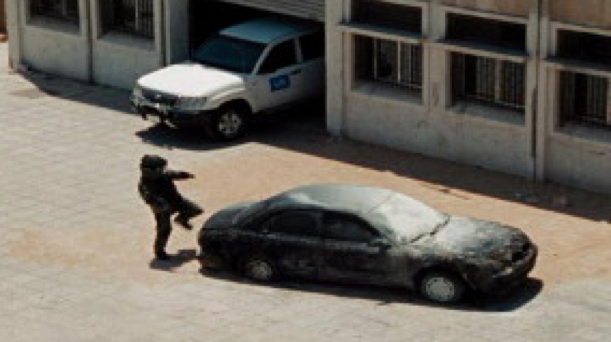
James’s reaction at the beginning of this scene confirms that he is fully conscious of the danger. His instinctive dropping of the wrench, which clatters harshly to the ground, seems uncharacteristic — it almost contains a hint of fear. This bodily reaction is juxtaposed with the casually disturbed tone of his “Oh God,” as if in response to a spilled cup of coffee. Without hesitation, he begins to remove his bomb suit and the line that follows is definitive of the whole scene, and perhaps James himself: “If I’m gonna die, I wanna die comfortable.” While most would take every inadequate precaution to save their own life, James does the opposite, tossing away his one means of protection.
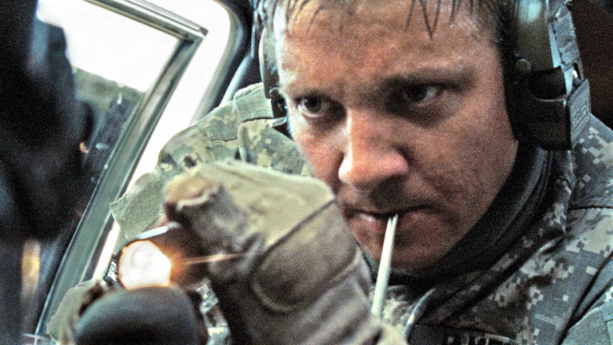
Perhaps this scene’s most defining characteristic is its lack of dialogue. After the short exchange quoted above, James spends seven minutes slowly, methodically, and silently searching the car for a detonator. Detachment infiltrates his every action: he tosses his headset when soldiers begin to nag him, he raises his middle finger to their continued protests, and he spends a lengthy amount of time disarming the pesky windshield wipers before he gets around to disarming the bomb. The experience of watching James fiddle with windshield wipers as tangible death presses ever closer strikes a chord.