
“A Different Kind of War Film: The Ethos of the Individual Soldier in The Hurt Locker”
by Mikal Lambdin | Xchanges 11.2
“I Don’t Know”: Leaving Things Out Cont.
Anonymity is used most pointedly in the final scene before James’s rotation ends and he returns home. After a gut-wrenching encounter with a suicide-bomb victim, the two soldiers engage in a solemn conversation:
SANBORN. I’m not ready to die, James.
JAMES. Well, you’re not gonna die out here, bro.
SANBORN. Another two inches. Shrapnel zings by, slices my throat. I bleed out like a pig in the sand. Nobody’ll give a shit. I mean my parents, they care, but they don’t count, man. Who else? I don’t even have a son.
JAMES. Well, you’re gonna have plenty of time for that, amigo.
SANBORN. I’m done. I want a son. I want a little boy, Will. I mean, how do you do it, you know? Take the risk.
JAMES. I don’t know. I just… I guess I don’t think about it.
SANBORN. Every time we go out, it’s life or death. You roll the dice. You recognize that don’t you?
JAMES. Yeah. Yeah. Yeah, I do. But I don’t know why, you know. I don’t know, JT. You know why I’m the way I am?
SANBORN. No, I don’t.
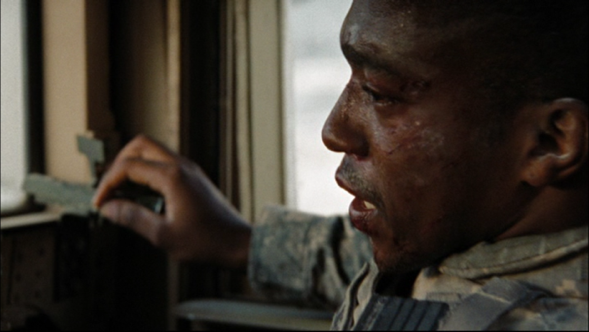
Shaken by the events that have just taken place, Sanborn exhibits sincere vulnerability and openness, and he looks for the same from James. This grave and touching scene seems to be a turning point in the film, readying James to finally open up. Instead, the exterior remains firmly in place. When Sanborn finally asks the critical question — “how do you do it?” — James responds the same way he has been responding since the beginning: “I don’t know.” He ends the conversation by turning the attention away from himself: “I don’t know, J.T. Do you know why I’m the way I am?” The question, like so many before it, goes unanswered.
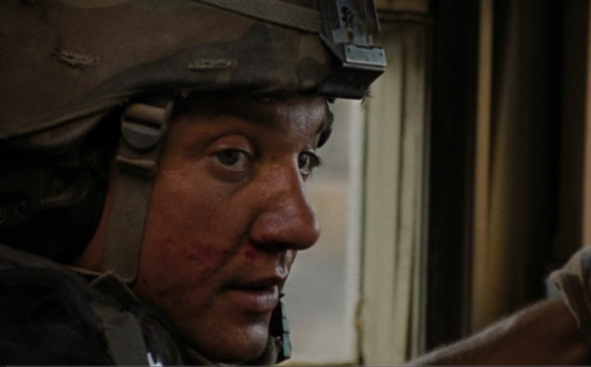
This moment is striking in that James is directly asked to reveal himself — his thoughts, his fears, his secrets. When he refuses to comply, it becomes clear that this scene is meant to serve a different purpose. If James’s ethos as an ordinary individual was not established before, it is now. This final, pointed anonymity is decisive proof of his normality. Even when it would be so easy to give in to film norms by building up to a thrilling moment of reveal, James’s character remains consistently elusive and unromantic.