
“The Ethics of Visual Rhetoric & Photo Manipulation”
by Amber McDonnell | Xchanges 10.2/11.1
The Scenario: The Spill and BP’s Response Efforts
On April 20, 2010, methane gas began to rise in the well of the Deepwater Horizon oilrig in the Gulf of Mexico. The rising gas resulted in an explosion that left seventeen employees injured and another eleven presumed dead after a search was conducted for missing persons. The rig was operated by Transocean, an offshore drilling company, and was under contract by BP. Halliburton Company, an oilfield services company, was also credited with some fault in the disaster (The Telegraph, 2011). The explosion led to the sinking of the Deepwater Horizon rig and also resulted in a wellhead blowout that allowed an estimated 1,000 barrels of oil to leak from the well per day, as of April 25, 2010 (Beard et al, 2010, p. 44). In September, the total number of barrels leaked from the well was estimated at 4.4 million. BP made several efforts at containing the oil and sealing the well over the next few months before the well was finally declared dead on September 19, 2010.
As BP continued to “blunder” in the wake of the disaster, public pressure mounted. CEO Tony Hayward made a “tactless” remark about wanting his life back that went viral in the media. Hayward reportedly went sailing off the Isle of Wight while cleanup efforts were ongoing, triggering further outrage. After continued pressure from the public, Tony Hayward resigned from his position as CEO on July 26, 2010.
In July 2010, BP admitted to “photoshopping” official photos that they had posted on their website to illustrate efforts to respond to the disaster. John Aravosis, an attorney and founder of AmericaBlog, is credited for pointing out the flaws in one of BP’s photos, claiming, “Anyone who has ever used Photoshop knows that this is an incredibly amateur job.” The nature of the images and the carelessness perceived by the public only added to BP’s list of gaffes in the wake of the disaster.
The Photos
This study analyzes two of the doctored images. Perhaps the most infamous doctored photo (Figure 1) shows three men in a control room thought to be located in Houston, presumably working on the company’s strategy for cleanup and disaster relief.
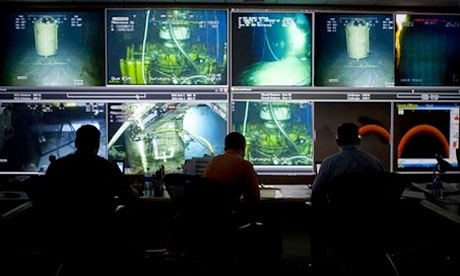
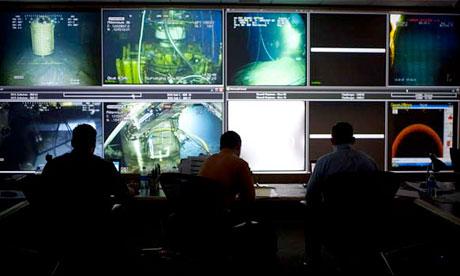
Barrett (2010) points out several main issues with the Photoshop manipulation: the photo’s metadata indicates it was taken in 2001; photos from the disaster had been cut and pasted on top of empty screens; and there is odd white space surrounding all of the workers’ heads, indicative of sloppy selection work in Adobe Photoshop. When confronted with the evidence that the image had been doctored, a spokesman for the company informed the Washington Post that BP’s post-production team had been notified not to manipulate photos in the future. After being criticized by the media, BP created an official Flickr page to display the original and edited photos. The Flickr page has since been deleted.