
“Editor’s Introduction: Rhetoric and Composition Graduate Students Define Their Identities Against Dominant Narratives”
by Al Harahap and Brian Hendrickson | Xchanges 15.1, Spring 2020
Our Background and Process
Symposium Co-Editors Al Harahap and Brian Hendrickson had held leadership positions in a number of graduate student organizations, and had been interested in finding ways to recognize the intellectual labor that graduate students were putting into their organizing and activism on behalf of supporting one another and contributing to a more equitable, inclusive, and intellectually rich field. In the spring of 2019, Xchanges Managing Editor Brian Hendrickson pitched the idea for this symposium to Rhet-Comp graduate student organizations DBLAC, nextGEN, WAC-GO, and WPA-GO, inviting them to brainstorm the structure of the symposium and identify its thematic keywords, yielding the word cloud included below as Figure 1:
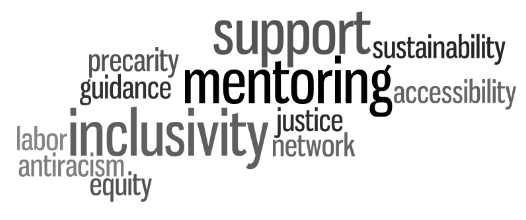
Figure 1: Symposium Keyword Brainstorm Word Cloud
The three most central themes to emerge from the thematic keyword brainstorm were inclusivity, mentoring, and support, followed by accessibility, antiracism, equity, guidance, justice, labor, network, precarity, and sustainability.
Al Harahap then joined Hendrickson, shaping the vision for the symposium through the call for proposals and implementation of equitable editorial practices. For both of us, it was important that from start to finish, the symposium embodied the themes of inclusivity, mentoring, and support as identified by its graduate student authors. The call for proposals was distributed across a range of listservs and online forums, with a particular focus on recruiting graduate student members of the CCCC caucuses.
We received more proposals than we could showcase, but because the submissions represented such a broad range of perspectives and concerns under-addressed in the literature, we opted to include as many voices as possible. We also wanted to encourage conversation across symposium pieces, so we asked authors to read one another’s early drafts and integrate references to one another’s pieces into subsequent drafts.