
“Mimetics as Digital Culture”
by Jacklyn Heslop | Xchanges 15.1, Spring 2020
Meme Creation and Reproduction
The people who create and read memes cannot be separated from the medium as they are the viewers who are ingrained in the culture that reproduces itself. As a result, this paper explores only one type of meme from one culture: memetic internet images. To best demonstrate the creation and reproduction of a memetic internet image (internet meme), the following section is an analysis of “Is this a pigeon” meme in relation to the “five fundamental logics” (multimodality, appropriation, resonance, collectivism and spread) used in meme creation as explained in Ryan Milner’s The World Made Meme: Public Conversations and Participatory Media.
Multimodality
The dissemination of information through the internet is aided by it multi-medium approach (Milner 24). Images, words, video, and coded reference to other works or experiences create a layered internet meme that relies on an understanding of one or more reference points to be read. For example, the image in Figure 1 is known to the meme community as the “Is this a pigeon?” meme, which shows a man confusing a butterfly for a pigeon.
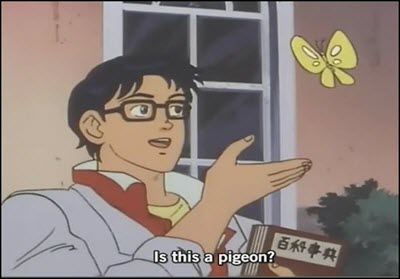
Figure 1: “Is this a Pigeon?” This screenshot is from a Japanese anime, The Brave Fighter Sun Fighbird, first televised in 1991 (“Is This a Pigeon?” Knowyourmeme).
Yutaro Katori, an android posing as a human research assistant for a local professor, humorously mistakes a butterfly for a pigeon while talking to a detective outside the professor’s home (“Figh Bird Episode 3 Subbed” 4:36). This meme combines a linguistic phrase with an image taken from a television show, both of which work together to be interpreted as the speaker’s confusion or conflation of unrelated concepts (a butterfly and a pigeon).
Appropriation
Milner defines memetic appropriation as “the process of creating a new meaning through the formats already established” (25). According to knowyourmeme.com, the only database of memetic internet content, this image with caption did not become a meme until early 2018 when a user on Twitter appropriated (mimicked) the format and Netflix, a week later, tweeted another new variation (see Figure 2)2 garnering a significant number of “likes” (“Is This A Pigeon?” Knowyourmeme).
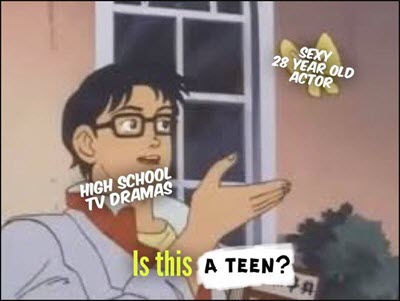
Figure 2: “Is this a Teen?” Netflix’s meme copied the same format but changed a few features to mock the use of adult actors for adolescent characters.
If the reader is familiar with the meme format, they will read it as the inherent flaw in dramas about high-school teens being performed by actors nearing their thirties. The meme’s creator uses the same image components (man, butterfly, text), but modified what each aspect represents in order to infer a new interpretation of the image. Nothing else can be changed within this meme without losing its readability. If “high school TV dramas” were to be placed anywhere else on the image, then the creator risks misinterpretation. So, while the meme can be appropriated to make new meanings, the style cannot change dramatically without losing the ability to be read and understood.
Resonance
Most media can be interpreted because the audience is familiar with the format of how it is supposed to be read. For example, graphic novels can be read successfully when the reader interprets the images in conjunction with the text because each part combines to create one message. Yet, if the reader has no experience with the content of the message, it becomes difficult to read. Memes, like other media, work because they are personally or culturally significant to the viewer. A meme’s ability to connect with an audience is what “resonates” with a group who then shares the meme further, infecting new people with the message.
In rhetorical theory, the idea of resonance ties together with Chaїm Perelman’s construction of universal and particular audiences. While often argued against for valuable reasons, Alan Gross situates audience construction by writing, “Perelman believes that all rhetorical audiences are constructed by the speaker. Of course, there are real audiences; of course, their study poses a genuine problem; but it is a challenge, he feels, beyond the scope of rhetoric: the study of real audiences is that business of experimental psychology” (204). A speaker’s intended audience is imaginary in the construction of the message, but the creator must consider who their viewer may be in order to create meaning that is capable being understood. In this sense, the message’s creator plays with their understanding of the intended audience to address the needs of those who may interpret or receive meaning. Of course, it is then reasonable that Gross attempts to place the study of audience with the realm of psychology rather than rhetoric, but persuasion can only be attempted through a construction of the message’s intended receiver leaving it firmly ground in rhetoric.
With this in mind, Gross concludes, “The audience is of two kinds, universal and particular. Universal audiences consist of all rational beings; persuasive discourse addressed to these thematizes facts and truth. Particular audiences consist of one segment or another of humanity: Americans, Republicans, Elks, Medicare recipients; discourse addressed to them thematizes values” (210). It is socially impossible to address a completely universal audience, as our world is fragmented by regions, religions, and concepts of personhood, but memetics is not concerned with the universal as its reach is limited to segmented digital communities. Instead, the construction of a meme, and its ability to resonate, depends on its appeal to a person’s values, such as humor, social belief, or interests.
Milner may not reference particular or universal audience, but he recognizes two types of connection: studium, “connection with an image on a cultural level,” and punctum, “connection with an image at the personal level” (30). Memes can be interpreted through these connections; for example, the image in Figure 3 is commentary on a cultural issue.3
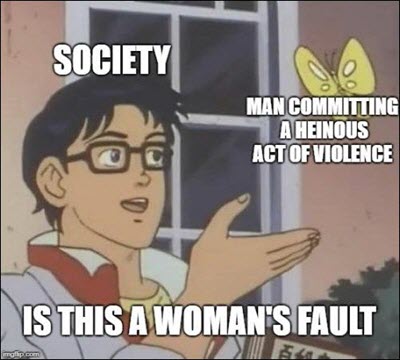
Figure 3: “Is this a Woman’s Fault?”
Next, punctum is a personal connection with the meme’s message. Figure 4 is meant to resonate with the individual.4
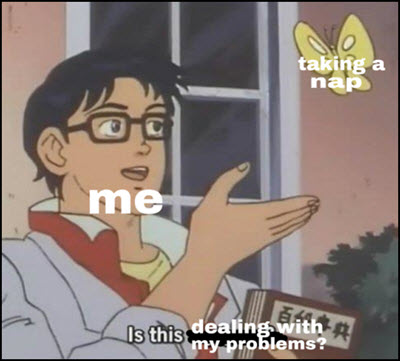
Figure 4: “Is this Dealing with my Problems?”
In rhetorical terms, these memes have been crafted to mock a belief or value common in the creator’s and audience’s community. Memes are able to resonate because they draw on the communal values that have been branded as flawed, thus inspiring the need for commentary. A universal appeal aims to be understood by the entire audience, but a meme will always have a limited reach since their primary method of communication occurs through a visual meant to be read by a group of people who are intimately familiar with the community who creates it. The meme begins in the particular audience, and it continues to address smaller groups through a call to studium and/or punctum.
Collectivism and Spread
Memes infect individuals, then those individuals spread memetic media further through social media platforms, i.e. Tumblr, Instagram, Facebook, Reddit, etc. It is the collective, the people who resonate with the media, who absorb the message, spreading it further to others who may relate. Thus, memetic media becomes representations of the culture or individuals’ behaviors/beliefs. Ryan Milner closes the first chapter of The World Made Meme with “these media [memes] are premised on collective strands intertwining to create new tapestries of cultural productions” (40). Internet memes combine visual and text to create a specific reference point to be read by the viewer, communicating the creator’s message through implicit inference. Thus, connection to the meme elicits a share to further demonstrate that one understands the reference and seek out others who “get it.”
To further explain, Eric Jenkins, in “The Modes of Visual Rhetoric: Circulating Memes as Expressions,” explores memetic spread, further arguing that memes are modes that become “circulating energies of contemporary existence rather than re-presenting the interests of particular rhetors” (443). Jenkins’ argument for the spread of modes does not localize itself on individuals or specific audiences, instead circulation is a collective phenomenon that consistently interprets and reconfigures these media to support “the broader media ecology” one that “continually alters situations and contexts by varying the rhetors, audiences, exigences, and constraints” (445). Rather than one cohesive unit of cultural spread, memetic media creates a rich, virtual ecosystem that plants and pollinates through various groups, ideas, and meme formats. Sharing a meme, the smallest unit of culture, is inherently a participatory act that aids in the success of the total ecosystem.
1 “Is this a pigeon?” Tumblr, uploaded by Indizi dell’avvenuta catastrofe, 6 December 2011.
2 “Is this a teen?” Twitter, uploaded by Netflix, 3 May 2018.
3 “Is this a woman’s fault?” Tumblr, uploaded by Pumpkinspicepunani 26 November 2018.
4 “Is this dealing with my problems?” Tumblr, uploaded by babashookbitch, 25 November 2018.